


Trainline: Train travel Europe
4.81.28K Reviews
App Specs
- Version
- 410.0.0.180178
- Updated On
- License
- Free
- Downloads
- 10,000,000+
- Developer
- trainline
- Categories
- Maps & Navigation
- Platform
- Android, iOS
Screenshots


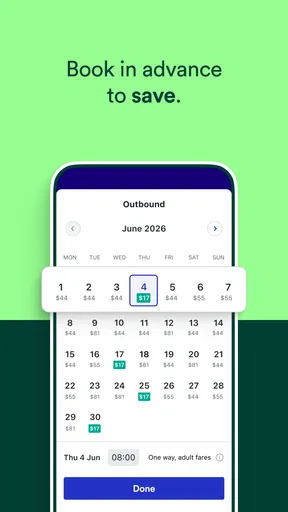
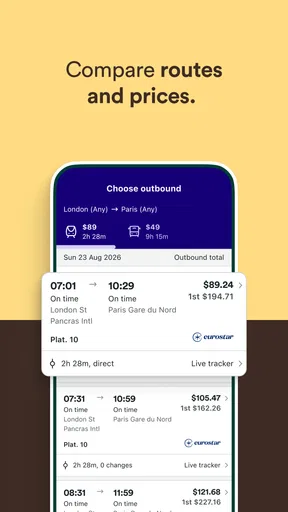

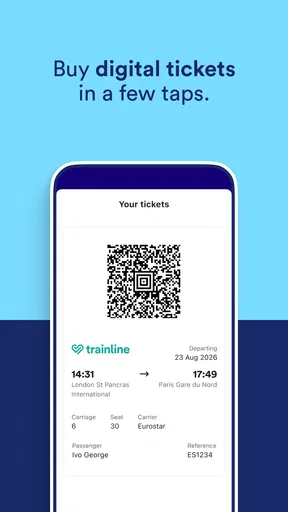
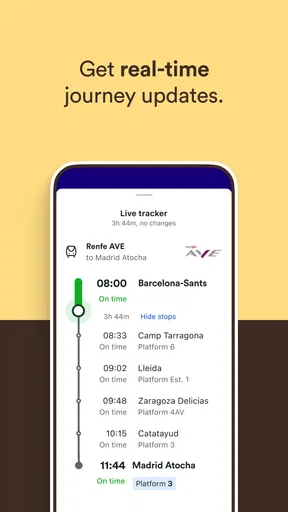
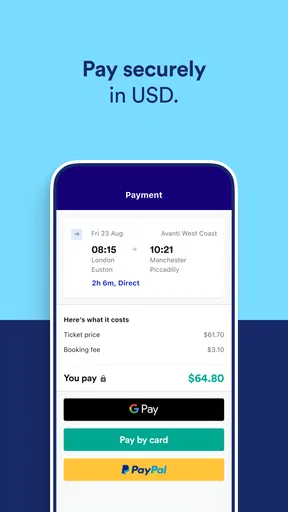
 Analysis by AppCompare
When I’m planning a trip across Europe, the biggest hassle is often not choosing a destination but working out which train or bus to take, where to buy the ticket, and how to keep track of changes once I’m on the move. Trainline: Train travel Europe brings much of that planning into one place. I see it as a useful booking and journey-management app, especially for people crossing borders or comparing rail options, rather than a replacement for every operator’s own service.
What the free price means in practice
The app is free to download, so trying it for a journey does not require an upfront purchase. That is a meaningful advantage when you want to compare routes before deciding how to travel. The tickets themselves are a separate matter: the app is a place to search for and buy travel, not a promise that every trip costs nothing. I would judge the value by whether its planning and booking convenience suits the journey I need, not by mistaking free access for free transport.
Trainline is a Maps & Navigation app from trainline, and its role is practical: it helps me look at travel options and manage a booking in one mobile workflow. It has a 4.8 average from around 873,000 ratings and over 10 million installs, which suggests many travelers have found a reason to keep it handy. Those figures do not tell me whether it will cover a particular route, so I still check the actual journey before relying on it.
Where the convenience earns its keep
The strongest value is having search and purchase together. Instead of opening several operator sites just to understand a route, I can start with a journey and compare the options Trainline presents. That is especially helpful when a trip spans more than one country or when I have not yet settled on a departure time. The app is aimed at travel across the UK and Europe, and it also covers bus journeys, so it can be useful when rail is not the only sensible leg.
For a familiar commute, a local operator’s app may already be all I need. For a weekend away with a connection or a cross-border leg, a broader search can save planning effort even if I later choose to check details with the operator. I like that distinction: Trainline is most useful as a comparison and coordination tool, not because every traveler must use one app for every ticket.
Making a booking easier to manage
Once I have chosen a journey, buying through the app keeps the ticket connected to the trip instead of leaving me to search through email at the station. The published description also highlights live times, which makes the app relevant after booking rather than only during the initial search. I would still pay attention to station displays and operator announcements; for a tight connection, a phone update should be one source of information, not my only one.
A practical habit is to check the full itinerary before paying: departure and arrival stations, transfer time, and whether the route involves a change that feels manageable with luggage. A low-looking fare is not automatically the best choice if it leaves little room for a delayed first train. This is where an app can make comparisons easier, but the traveler still has to decide what kind of connection feels safe.
Worth Reading Before You Choose

Flipboard Shows What News Apps Must Do Beyond the Feed

Switching to Android Auto Means Rethinking Your Driving Routine

Google Calendar Makes a Crowded Week Easier to Manage

Ludo King Makes the Most of the Minutes Between Plans

Baby Panda World Brings Quick Play to Modern Phones, but Its Game Library Feels Busy

ESPN’s Live Game View Makes Following Close Games Easier
A realistic day on the move
Imagine I’m leaving London for a weekend in another UK city and have a bus connection at the far end. I can use one planning session to review train choices and the onward bus, then keep the booking details on my phone while traveling. If a departure time changes, live information may help me notice and reassess sooner. I would check the station screens as well, especially before boarding, and leave enough time for the transfer rather than assuming every leg will line up perfectly.
For a traveler arriving in an unfamiliar European station, having the journey details readily available can reduce the small but tiring tasks: remembering the departure time, finding the next leg, and locating the ticket. It does not remove the need to learn the station layout or verify platform information, but it can make the itinerary easier to follow when attention is already divided between signs, bags, and announcements.
Useful habits for comparing options
When I compare departures, I look beyond the headline fare. A slightly different time may produce a more comfortable connection, and a route that avoids a rushed platform change can be worth more to me than the smallest possible saving. If the app presents several ways to travel, I treat them as choices to inspect rather than assuming the first result is automatically right for my plans.
For journeys with multiple legs, I also make a note of which operator runs each part and keep the complete itinerary easy to reach. That gives me a clearer picture if one leg is delayed and I need to understand what comes next. It is a small preparation step, but it is more useful than discovering at the platform that I had only checked the first departure.
All Aboard the Convenience Express
When you first download the Trainline app, you’re greeted with a clean, intuitive interface that practically begs you to start planning your journey. The app covers a wide range of European countries and connects you with various train operators, making it a one-stop-shop for your travel needs. I’ve hopped through France, Germany, and the UK, all with just a few taps on my phone. It’s honestly a game-changer when it comes to simplifying the travel process.
Booking Made Easy
One of my favorite features? The seamless booking process. You can search for train times, compare prices, and book your tickets all without leaving the app. No more juggling between different websites or trying to decipher foreign train schedules. The app even allows you to save your tickets offline, so you’re never scrambling for Wi-Fi just to show your ticket to the conductor.
Real-Time Updates: A Traveler’s Best Friend
If you’re anything like me, the unpredictability of travel can be a bit stressful. But with Trainline, you get real-time updates on train times, delays, and platform changes. I’ve found this feature to be particularly useful when navigating bustling stations where announcements are easily missed. Plus, the app sends notifications, so you’re always in the loop.
Eco-Friendly Travel
Another aspect I appreciate is the app’s focus on sustainable travel. By promoting train travel over flying, Trainline helps reduce your carbon footprint. Not only do you get to enjoy the scenic views of the European countryside, but you’re also doing your part for the environment. It’s a win-win!
Some Handy Extras
Beyond the basics, Trainline offers some nifty extras that make travel even smoother. You can set up alerts for price drops, which is perfect for budget travelers. There’s also an option to sync your calendar with your travel plans—ideal for those of us who need that extra organizational boost.
Another cool feature is the split ticketing option. It might sound a bit technical, but it’s essentially a way to save money by breaking your journey into separate tickets. The app does all the hard work for you, finding the best way to save a few bucks.
Room for Improvement
While Trainline is a fantastic tool, it’s not without its quirks. Occasionally, the app might not reflect last-minute schedule changes as fast as I’d like. Also, although it covers a wide range of operators, there are a few smaller ones that might not be included.
Some users have mentioned that the customer service could be more responsive. Personally, I’ve never had major issues, but it’s something to keep in mind if you run into any snags.
Despite these minor hiccups, the app’s overall performance and the convenience it offers far outweigh its shortcomings.
Who I’d recommend it to—and who might skip it
I’d recommend Trainline to people who take occasional trips across the UK or Europe, especially when they need to compare rail and bus options, coordinate several legs, or keep tickets together on a phone. It can also suit someone planning a first independent rail trip: searching in one place makes the initial comparison less daunting, while checking the itinerary carefully keeps the decision grounded in practical details.
I would not make it my only reference for a route where an operator’s own app or station staff can provide more direct journey information. The broad search is useful, but coverage can vary, and the original app experience notes that some smaller operators may not appear. If my trip depends on a particular local service, I would check that operator separately before building the rest of the day around it. A traveler who rarely uses public transport and already has a simple, familiar route may also have little need for another booking app.
How it compares with other ways to plan
The usual alternative is to search through individual rail or bus operators, or use a general map app to understand where stations are and how to get between them. Each approach has a different job. Operator apps can be the more direct place to manage a service they run, while maps are useful for orientation around a city. Trainline’s advantage is bringing journey search, ticket purchasing, and travel details together across a broader trip, so I do not have to begin by guessing which company serves every leg.
That does not make it a universal winner. A general map can be better for walking directions once I reach a station, and an operator’s own channel may be preferable when I need information specific to its service. I use Trainline to assemble and compare the journey, then use station signage and operator information to confirm what is happening on the day. That division of labor feels more dependable than expecting one app to answer every travel question.
Small trade-offs that matter on travel day
Live updates and notifications can make it easier to catch a change, but they do not remove the need to stay alert. Phones can be muted, battery can run low, and a crowded station is a poor place to depend on a single notification. Before leaving, I make sure I can access my ticket and know the basic itinerary; at the station, I still check the departure boards. Offline ticket access is particularly helpful when connectivity is unreliable, but it is worth opening the ticket before the journey rather than waiting until the gate or conductor asks for it.
Price alerts and split ticketing can help with planning, but I treat them as tools for exploring options, not guarantees that every search will produce a saving or that the cheapest itinerary will be the most comfortable. With separate tickets, I pay close attention to the connection and the consequences of a delay between legs. If I value simplicity more than squeezing out a possible reduction, a straightforward ticket may be a better fit for me.
The app is listed as free, rated for Everyone, and runs on Android from version 8.0; its current version is 398.0.0.174453. Those details make it accessible to a broad range of users, though an older phone or a device outside that minimum should be checked before planning around it. Trainline was released on December 21, 2010, and its long presence in travel apps is reassuring context, but I would still make my decision based on whether it handles the routes I actually take.
My buy-or-skip verdict
For me, this is an easy app to try because access is free, and it earns a place on my phone when I have a journey to plan across multiple services or need tickets close at hand. I would keep it as a practical travel companion, while confirming important changes through station displays or the relevant operator. Its strongest case is convenience across a mixed itinerary; its weaker case is a very local route where a single operator already does everything I need.
In conclusion, if you’re planning a trip across Europe, Trainline: Train travel Europe is an app you’ll want to have on your phone. It’s like having a trusty travel companion that’s always ready to help you navigate the complexities of European train travel. Bon voyage!
Pros
- User-friendly interface enhances booking experience.
- Wide coverage of European train routes.
- Real-time updates on train schedules.
- Supports multiple languages for ease of use.
- Secure payment options ensure safe transactions.
Cons
- Occasional app crashes reported by users.
- Limited customer service response time.
- Offline access to tickets can be unreliable.
- Some features require stable internet connection.
- In-app advertisements may disrupt user experience.
FAQs for Trainline: Train travel Europe
What features does the Trainline app offer to enhance my travel experience?
The Trainline app provides a comprehensive platform to book train tickets across Europe. It offers real-time updates, seat reservations, mobile ticketing, and journey planners. Users can also access live train schedules and receive alerts about any changes. The app supports multiple languages and currencies, making it ideal for international travelers.
Is the Trainline app user-friendly for first-time users?
Yes, Trainline is designed with an intuitive interface that simplifies booking and managing rail journeys. It guides users step-by-step through the ticket purchasing process, helping them find the best routes and prices. The app also includes customer support features and FAQs to assist new users in navigating the platform with ease.
Can I use the Trainline app offline during my journey?
While active internet is required for booking tickets and receiving live updates, the Trainline app allows you to download your tickets and journey details for offline access. This ensures you have all necessary travel information even without an internet connection, providing convenience and peace of mind during your trip.
Does Trainline offer any travel discounts or special deals?
Trainline frequently features discounts and promotions on train tickets across various European rail networks. Users can benefit from early booking discounts, group travel deals, and railcard savings. The app also provides a fare predictor tool to help users find the best time to purchase tickets at the lowest possible rate.
What payment methods are available on the Trainline app?
The Trainline app supports a wide range of payment methods to accommodate different user preferences. You can pay using credit and debit cards, PayPal, Apple Pay, and Google Pay. The app ensures secure transactions, providing a hassle-free payment experience for users booking their travel plans.


